



Edible Plants of Southwest Oregon By Nolan Richard
Late spring and early summer is a wonderful time to look for edible plants in the mountains of southwest Oregon. It is this time of year that many herbaceous plants start leafing out and flowering at elevations above 4,000ft. Here’s a few common native plants that have edible leaves. You can find all of these plants on the higher elevation trails around Ashland such as Grizzly Peak, Hobart Bluff, and Pilot Rock.
Violets, Viola spp (Viola glabella pictured)

Violets, Viola spp (Viola glabella pictured)
All violets have edible leaves, though some taste better than others. Collect fresh leaves (lighter green and smaller). Avoid eating large quantities due to the high level of saponins present in some violets. You might be surprised that some leaves have a minty flavor!
Violets are straightforward to identify. They have heart shaped leaves and five irregularly shaped petals with the bottom petal being the largest.
Waterleaf, hydrophyllum spp (Hydrophyllum fendleri pictured)
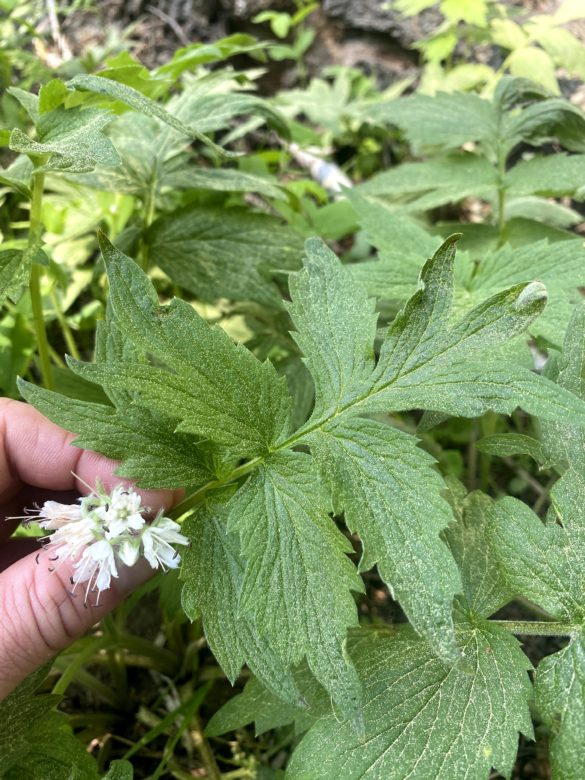
Waterleaf, hydrophyllum spp (Hydrophyllum fendleri pictured)
The Leaves and shoots of this forest floor plant are edible, while the roots are edible once cooked. The taste is variable – some people find the leaves too bitter.
Look for plants that have pinnately lobed leaves and flowers arranged in tight clusters. Look for stamens that extend well beyond the petals.
Onions, allium spp (Allium siskiyouense pictured)
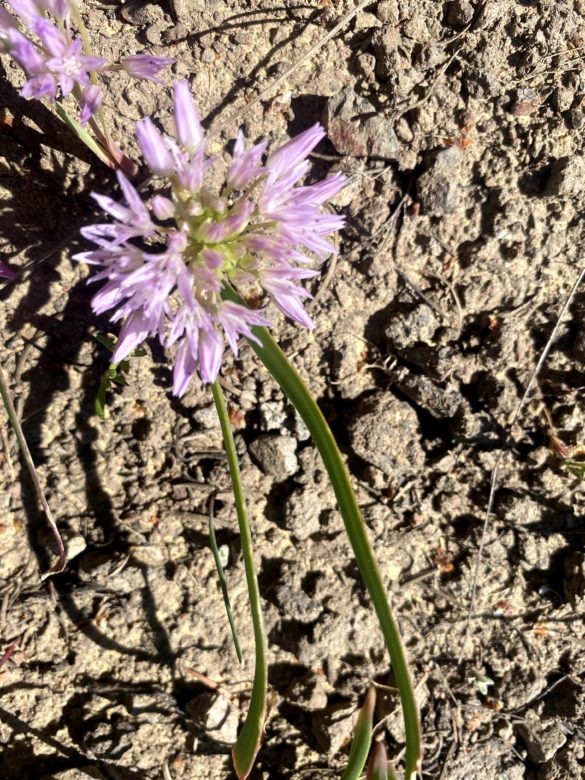
Onions, allium spp (Allium siskiyouense pictured)
Just like store bought onions, all wild onions are entirely edible – the flowers, leaves, roots and all. The underground bulb is sometimes tiny, but often sweet.
Look for plants with long skinny leaves and clusters of flowers with each flower having 6 tepals and 6 stamens. Care should be taken not to mistake onions for Death camas, which look similar but have leaves that clearly don’t smell like onion.
Candy flower, claytonia spp (Claytonia sibirica pictured)

Candy flower, claytonia spp (Claytonia sibirica pictured)
This plant is a very close relative to miner’s lettuce, a common edible plant of lower elevations. Though not quite as tasty, Candy flower has crisp, yet juicy leaves that would work well in a salad.
Look for small succulent paired leaves that give rise to a five petaled pink flower with small lines on the petals.

Check out our assortment of Foraging guide


Pacific Northwest Medicinal Plants at Northwest Nature Shop





Comments
No comment yet.