



How to Prevent Salmonella Infection in Birds
By Chris Uhtoff, co-owner of Northwest Nature Shop
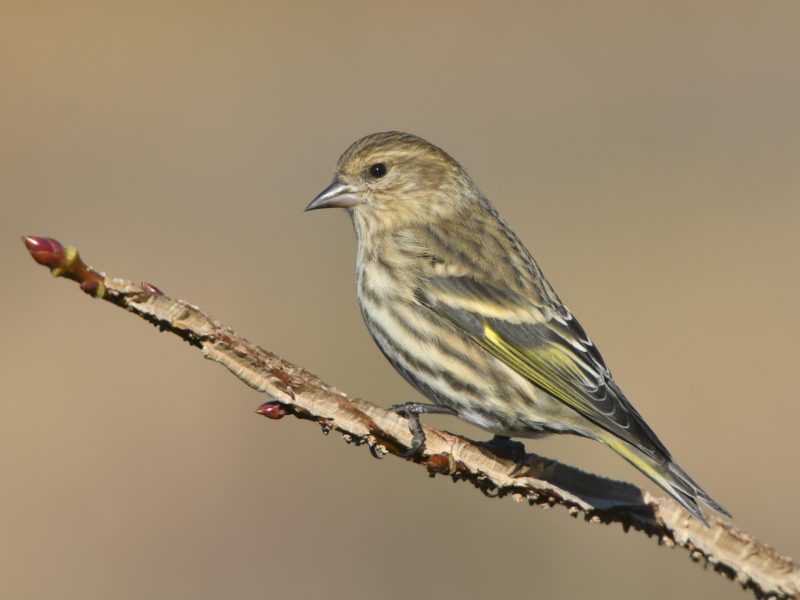
Pine Siskin Photo By William Dawson
There has been an unprecedented increase in backyard bird feeding since 2020. While feeding birds is a great way to get closer to the wildlife in our neighborhoods, it is important we do not endanger wildlife by spreading disease. Here in Southern Oregon, Wildlife Images in Grants Pass as well as other wildlife rehabilitators in the Northwest have seen an increase in what appears to be Salmonella poisoning in Pine Siskins this winter. Salmonellosis is a disease caused by salmonella bacteria spread primarily by fecal contamination.
Disinfect Feeder
If you see a sick or particularly lethargic bird at your feeder, remove the feeder, clean and disinfect it immediately. If the feeder is frequented by large flocks during a time of Salmonellosis outbreak such as this, do not put the feeder back up for at least 2 weeks to allow those flocks to disperse.
Clean your feeder using warm soapy water. Then disinfect the feeder by soaking it in a 10% bleach solution (1 part bleach /9 parts water) for ten minutes, rinse and let dry before reusing. Use the same technique to clean bird baths.
Plastic, ceramic or metal feeders will be easier to clean and sterilize completely than wood feeders.
During a Salmonella outbreak, avoid using platform feeders or other feeders that allow bird droppings to intermix with the seed.
Monitor Bird Seed
If you are using a bin style or tray feeder it is a good practice to only put out the amount of seed that will be eaten in a day which will lessen the amount of time uneaten seeds will sit in the feeder and potentially be contaminated.
Clean up all uneaten seed below the feeder which may have been infected.
Personal Hygiene
When cleaning bird feeders and baths, be sure to wash hands well afterward because salmonella bacteria can infect humans and pets.
There is not a generally successful treatment to recover birds stricken by Salmonellosis, however injured or sick birds can be reported to Oregon Fish and Wildlife (ODFW) at 866-968-2600 or email wildlife.health@state.or.us
If you are in Southern Oregon, injured birds can be brought to Wildlife Images in Grants Pass; our local, licensed wildlife rehabilitation center. Their phone number is 541-476-0222.


Thank you so much for posting this. You got more of the information right than many other resources, however several bird rescues have said that taking down feeders just causes more congestion at the remaining feeders. I agree that taking them down is good advice if the homeowner is unwilling to sterilize feeders every single day.