



Are These Mushrooms Edible?
Written by Jay Van Tussenbrook
It’s better not to guess.
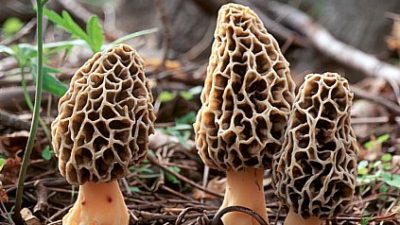
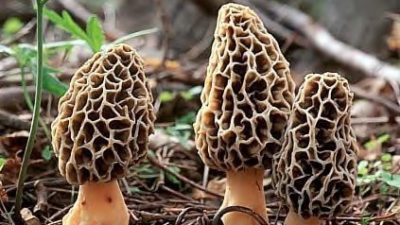
As the rains come and the weather warms, spring flowers aren’t the only thing popping up out of the soil. Those little mounds of earth steadily rising in the backyard will soon open up to reveal mushrooms! Here in Southern Oregon that most likely means the appearance of the Morel mushroom, one of the most easily identifiable mushrooms as well as most tasty. Mushrooms are one of the most mysterious and interesting aspects of nature. Still not completely understood by science, it is believed that mushrooms are but the fruiting body of large network of fungal filaments called mycelium. The mycelium penetrates the earth in the soft forest floor, each species having their own particular needs. The spores of the mushroom interact with the mycelium to trigger the growth of mushrooms.
Our annual Mushroom Fair is a great place to learn about fungus!
Mushrooms have been used for many purposes through the years. Some mushrooms have been used for religious purposes, for medicine, or even to poison enemies. Eating any unknown mushroom is not only foolhardy, but can be quite dangerous. Even easily identifiable mushrooms such as the Morel have look-alikes that can cause severe illness or even death. It is therefore recommended that you make sure to identify any wild mushrooms beyond the shadow of a doubt before consuming them. Besides the shape and color of the fruiting body another sure way to identify them requires examining the spore-print and the shape of the spores themselves. There are many good books on the subject, but none more accurate or informative as “Mushrooms Demystified” by David Arora. It includes a complex dichotomous key for identifying mushrooms by physical characteristics as well as by spore. Arora’s other reference book, “All That the Rain Promises and More” is another popular guide and a cult classic.
Mushrooms come in all shapes and sizes, and all colors of the rainbow. Sometimes referred to as the “jewels of the forest,” they fulfill an important role in the ecology of the forest. Mushrooms differ from green-leaved plants in that they have no chlorophyll and so depend on both living and dead organisms to get their nutrients. Most mushrooms are called saprophytes, and feed on dead organisms like trees or humus on the forest floor. Those that feed from living organisms are parasites, and can often lead to the death of the organisms they feed on. Both types are important to the balance of nature in the wild, and both types eventually return the nutrients they absorb to the ecosystem, by re-absorption by plants or by being eaten by wildlife.
Like most things in the natural world mushrooms can be both heavenly and horrible. Learn to appreciate and identify the huge variety of mushrooms in your area and you can begin to see them in a way that leads to a new appreciation for the complexities of the ecosystem. Learn to identify the edible mushrooms in your area, and add a touch of the wild to your diet. Your taste buds will thank you.
Comments
Comments are closed.